
What No One Tells You About Planning After a Long School Day
Most lesson planning advice sounds like it assumes you’re sitting down with a cup of coffee, a clear mind, and unlimited energy.
But for new teachers, planning usually happens after a full day of teaching—after managing behavior, answering questions, grading work, and putting out small fires you didn’t anticipate.
By the time you sit down to plan, you’re mentally tired. And that matters.
Planning is decision-heavy work. You’re choosing objectives, activities, pacing, materials, and assessments. When you’re already exhausted, every decision feels harder, and planning stretches longer than it needs to.
This is where burnout can quietly start.
The issue isn’t that you’re planning at the wrong time—it’s that you’re planning without a system that supports you when your energy is low.
Sustainable lesson planning doesn’t rely on motivation. It relies on routines, repeatable structures, and knowing which decisions actually matter.
When planning feels predictable, it takes less mental energy—and that leaves more room for rest.
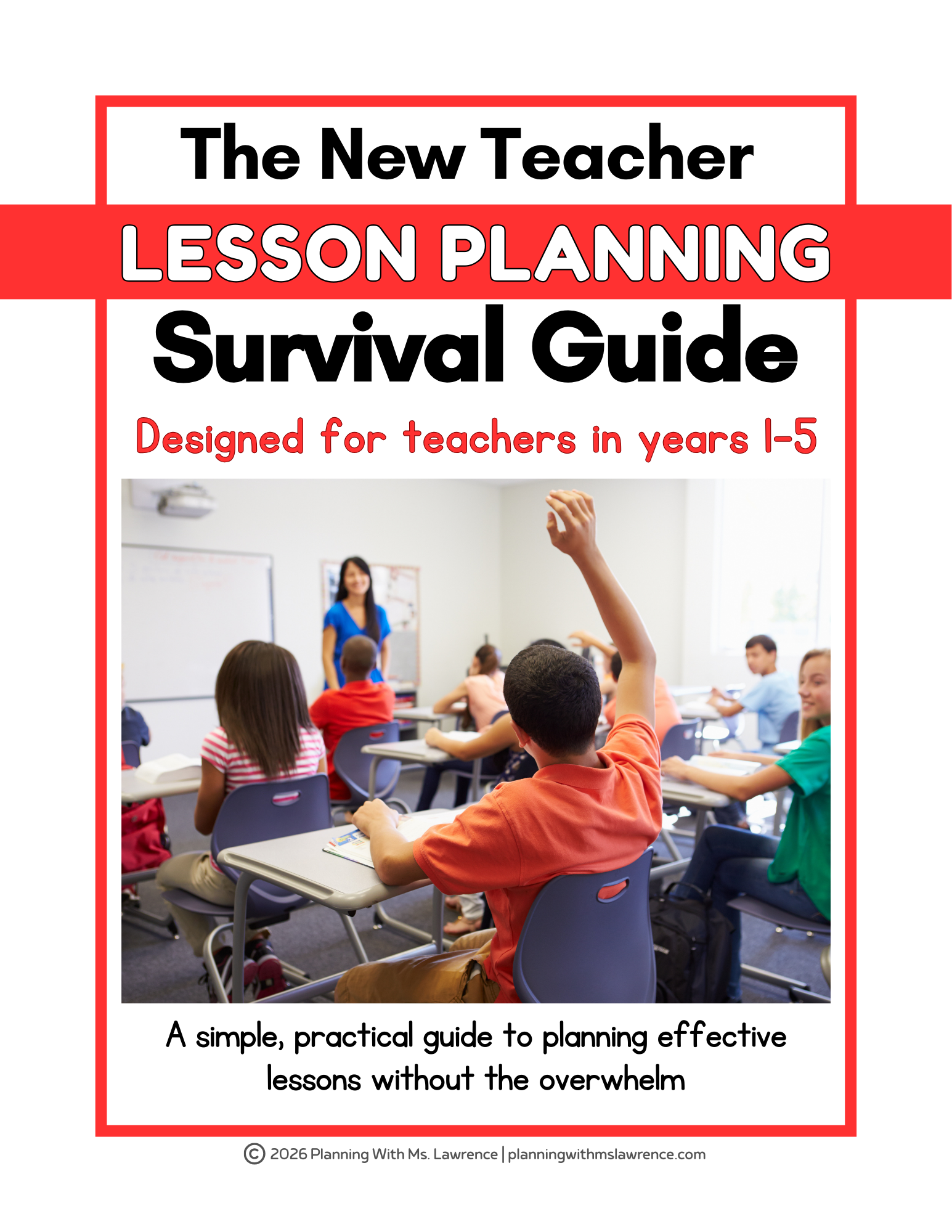
If lesson planning feels especially overwhelming at the end of the day, you’re not alone. I created a free resource to help new teachers plan in a way that respects their time and energy.
👉 Download the New Teacher Lesson Planning Survival Guide to learn how to plan even on the days when you’re exhausted.