
Good Lesson Plans Aren’t Complicated — They’re Clear
Somewhere along the way, many new teachers get the message that a “good” lesson plan has to be elaborate.
Multiple activities. Detailed slides. Creative hooks. Perfect pacing.
But here’s what I’ve learned after years in the classroom and supporting other teachers: the strongest lesson plans are rarely the most complicated ones.
They’re the clearest ones.
Clear lesson plans answer a few simple questions:
What do I want students to learn?
What will they actually do to learn it?
How will I know if it worked?
When those things are clear, the lesson usually flows—even if everything doesn’t go exactly as planned.
When they aren’t clear, even the most beautifully designed lesson can fall apart.
New teachers often put pressure on themselves to make every lesson impressive. But students benefit far more from consistency and clarity than constant novelty.
A simple, well-structured lesson taught with confidence will almost always be more effective than a complicated one that’s hard to manage.
Learning how to plan for clarity takes time—but it’s a skill you can absolutely build.
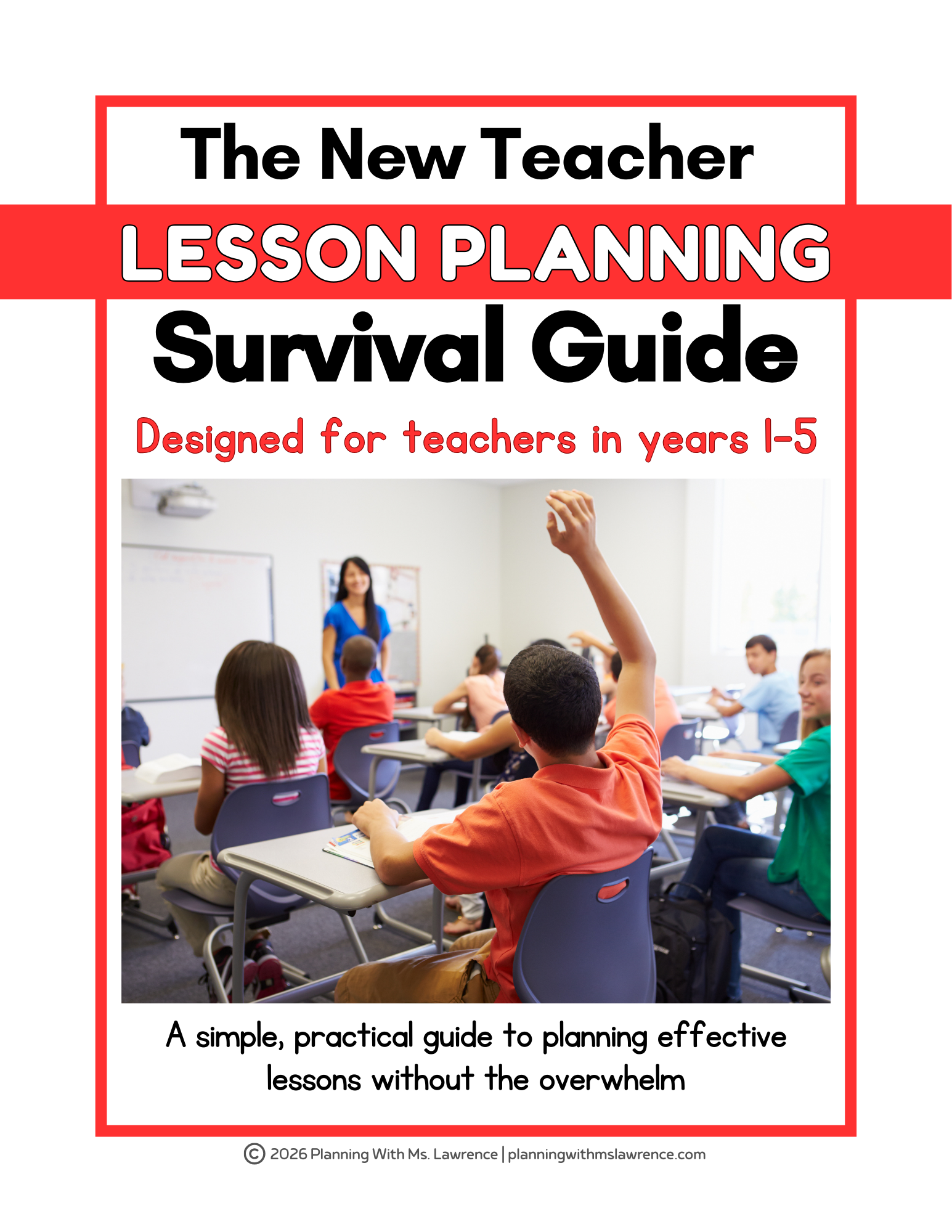
If you want help developing lesson plans that are focused, realistic, and easier to teach, I created a free resource specifically for new teachers.
👉 Download the New Teacher Lesson Planning Survival Guide to learn how to plan lessons that feel manageable and purposeful.