
Why Lesson Planning Feels So Hard Your First Few Years (And Why It’s Not Your Fault)
If you’re a new teacher and lesson planning feels overwhelming, exhausting, or way harder than you expected—let me start with this:
It’s not because you’re bad at it.
Most new teachers come into the classroom knowing what they want students to learn, but not how to consistently plan lessons that actually work in real classrooms. And that’s not a personal failure—it’s a gap in how teachers are trained.
In teacher prep programs, lesson planning often lives on paper. You learn how to write objectives, fill out templates, and align standards. What you don’t always learn is how to plan when:
You’re tired after a long day
Your class looks nothing like the one in your methods course
Time is limited and expectations are high
So instead of having a clear process, many new teachers sit down to plan and stare at a blank document wondering where to even start.
Here’s the truth: lesson planning is a skill. And like any skill, it gets easier with the right structure.
Strong lesson plans aren’t about being creative every day or having the most impressive activities. They’re about clarity—knowing the purpose of the lesson, what students need to do, and how everything fits together.
Once you have a planning approach that makes sense, the stress starts to fade.
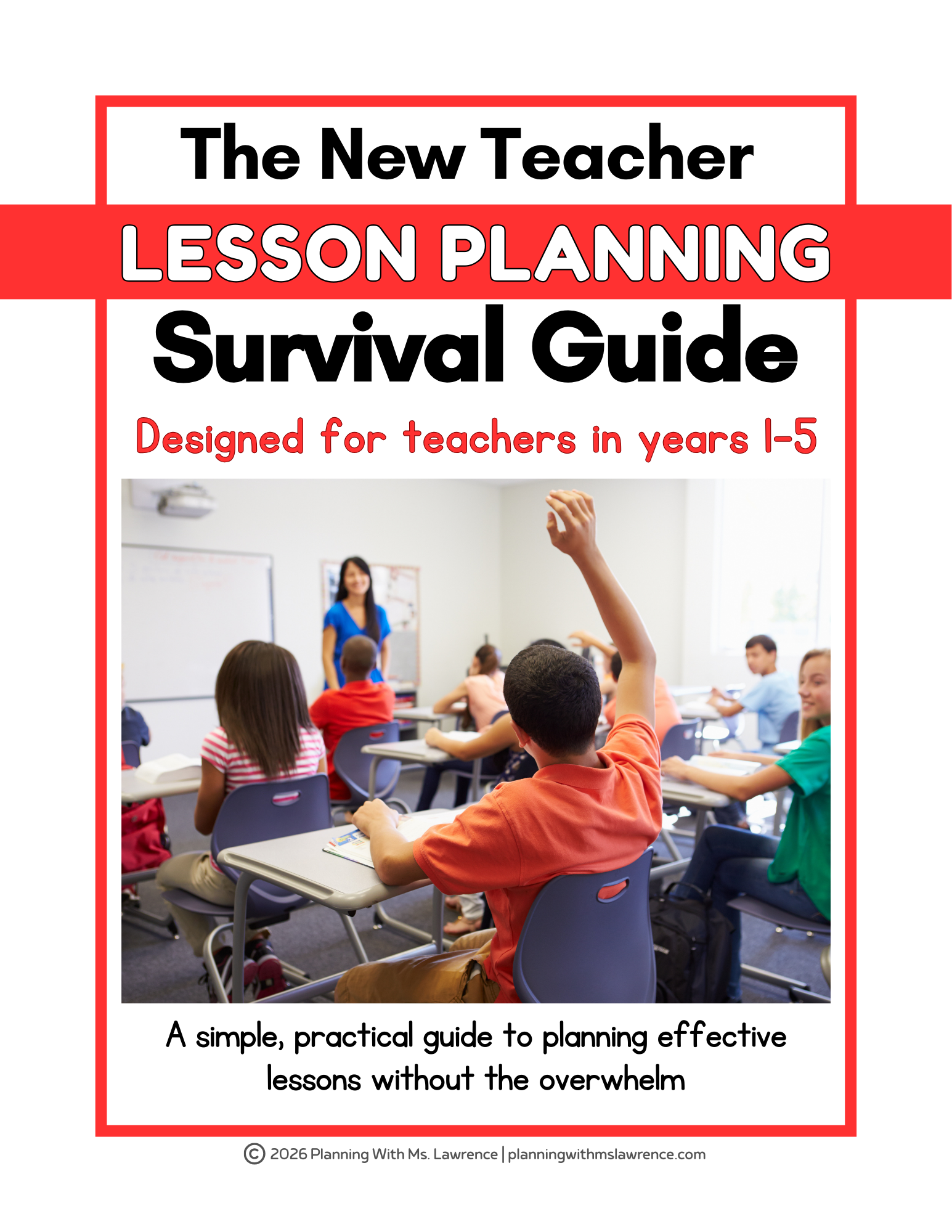
If you’re in your first few years of teaching and want a more realistic way to approach lesson planning, I created a free resource to help.
👉 Download the New Teacher Lesson Planning Survival Guide — a practical guide designed to help new teachers plan with more confidence and less overwhelm.